Friday, August 26, 2011

Ain't nothing better...

...than the summer in the Northwest

Click here to open the music in a new window

Top Photo: Garrett Grove cranking the excellent corner pitch of "The West Face of Colchuck Balanced Rock" (5.11-).
This Photo: Colchuck Lake, from the route.

Blake and Garrett approaching above Colchuck Lake.

I've climbed with many Washingtonians in the past few years, and would all probably tell me that I was spoiled on my first rock climb here in the Apple State. We climbed the above pictured West Face of CBR, and the rock was amazing!
The West Face is the original route on the face, and now goes free at 5.11, but there are scads of other good lines, many of which have been FAed in the past few years. And maybe some still juss a-wayten thar...

Near the summit of CBR, both Garrett and Blake ply their respective trades: Garrett shooting, Blake doing his patented rope-flip-coil-pose.

Speaking of good rock, if you are in the area, be sure to check out the new #9 route on my personal list of"TOP TEN LONG GRANITE ROUTES (from low-mid 5.12)": LET IT BURN

Me leading on the new #9. Garrett Grove Photo.

It's also on Colchuck Balanced Rock, just left of the West Face route. It was put up last year (!) by the local rock crushing crew, and it provides many hundreds of feet of granite bliss and full-face grins.

Here's a link to Blake post about this climb with topo and description.


Hanging on a ledge on North Early Winter Spire, Washington Pass. Garrett Grove Photo.


After more climbing and cragging in the Leavenworth area, and much good eating and drinking (peach whiskey, hard apple cider, heaps of flavorful local microbrews), Blake and I needed to "harden the F up".

So, we hiked 20 miles back into the Pasayten Wilderness in north-central Washington and spent a week exploring and putting up a new route on each of the three major faces in the area. Above is Amphitheater peak.

Huge thanks to the Mazamas Club of Portland, Oregon for some generous support that helped us to make this trip happen!

We still managed to eat well.

The 300m South face of Cathedral Peak. We climbed a new route on the right side of the main face, which we called "Last Rights" (the mountain has a Catholic naming theme, and we kept traversing right to avoid seamed out cracks). Again, check out Blake's blog for more photos and info from the new routes.

Blake pulling into a perfect splitter during our onsight FA of "Finger of Fatwa" (5.11, 175m) on Amphitheater Peak. (That peak had a Islamic naming theme, and the specific buttress is called the Middle Finger.)

Much to our surprise, we met a few other climbers up there. Not so surprising, Blake knew them. So I got to make new friends and share some whiskey, and we did a bit of cragging at the base of Amphitheater. "Finger of Fatwa" is the left leaning, left facing corner and roof system near the left edge of the cliff.

Blake checking out the Deacon from our bivy.

Blake about to hit a perfect hand crack on the 400m Northeast face of the Deacon.

The Deacon definitely provided my favorite of the route of the trip; we climbed the obvious "line of strength" up the middle of the face. Even still, the mountain threw us a few curveballs and there were some exciting leads to connect incipient or flared crack systems.

We ended up aiding one pitch, which appeared to be a totally closed seam from below. In reality, though, there were small RP placements and occasional fingerlocks under a layer of dirt and moss, and once we cleaned it out we rapped back down to redpoint the pitch at 5.11.

We called this route "The Heretic" (5.11, 400m).


This monstrosity is the giant, steep, and massively chossy East face of Tower Mountain. Located just north of the popular cragging at Washington Pass, this huge face had drawn the curiosity of Blake and fellow Washingtonian Sol Wertkin for quite a while, we the three of us kitted up to make an attempt.

After hiking in and bivying, we got to the face, realized it was riddled with orange streaks of kitty-litter/oatmeal decomposing grano-diorite. Still, we picked out the path that included the most good dark-colored rock and gave it an effort. My lead lasted maybe one hour, gained about 40', and actually included chunks of solid rock. But unfortunately the solid rock did not coincide with continuous cracks, and the bleak prospects above combined to cause us to BAIL!

So, if you have lots of time on your hands, don't mind a little grainy-ness here and there (and everywhere), maybe load up your compressor and hike out to Tower Mountain. It could be the Cerro Torre of the North!

No, there ain't nothing better than the summer in the Northwest. The weather has been immaculate, the food, beer, rock and friends have been plentiful, and the swimming holes can't be beat. If you don't mind long approaches and maybe a mosquito or two, pencil in some plans for next summer!

Coming up next, a description of the new #3 on my personal list of:
TOP TEN LONG GRANITE ROUTES (from low-mid 5.12)

Tuesday, August 2, 2011

In the land of Red, White, and Granite.

My late summer roadtrip has officially commenced, I'm in Squamish, and everything is going swimmingly. The mellow feel of this self-proclaimed "Outdoor Recreation Capital of Canada" is just the sort of atmosphere into which I can immerse myself, ignoring all outside happenings.

Good friends, new and old, are in residence in this centre of granite action, and much climbing, beer drinking, scrabble, shooting-of-the-shit, and all-around chilling has been enjoyed by all.


In Canada, by law, all signs must be printed in both English and French.


The view from our camp "down by the river". Kevin gives Bronson the layout of the Chief.


Cody, who I met back in Boulder in the Spring, is joining all the cool kids in Canada at the moment. Here, Cody, Loki, and Kathleen enjoy a post-cragging snack.


This and the rest of the photos are from yesterday, when Cody and I climbed until out eyes bugged out. Here, I'm following the first pitch of the famous University Wall. Cody put in an inspiring effort leading this wet, overhanging OW slot. Good on ya, buddy!

A bug-eyed view of town, from the Chief.

The Chief, from town. Both the U-wall and the Grand Wall climb up the first two thirds of the right side (and then traverse off a ledge).

Cody leading a stemming pitch high on U-wall. Lots of stemming on that route.

Finishing U-wall. We attempted a harder "variation" (actually the original aid line), the Shadows pitch (12d). Like a bi-polar supermodel, it drew me in with it's aesthetic perfection, and then denied me with it's fickle, ungrasp-able nature. Or something like that.

I fell many times on the ridiculous stemming pitch, and ended up pulling on gear. Other than that, I didn't fall all day (the rest of the route is 5.12a).

After ambling down the descent trail (which is awesome: wooden stairs and trail-marking reflectors, Thanks Canada!), we ate lunch in the parking lot and re-stoked. Here we are on the Grand Wall, with Cody leading the Split Pillar.

Cody starting up "Perry's Lieback" on the Grand Wall, as the evening light gets good. We ended up finishing the route in daylight and not even breaking out headlamps on the descent. We sent Apron Strings to the Grand (10 pitches, 5.11a A0) in a total of 2 hrs and 40 min, with no simuling.
----------------------------
Hopefully there'll be much more Canadian sending to come. Earlier in the trip, my friend Brad and I climbed "Alaska Highway", and I can't wait to get back there to finish the "Northern Lights" linkup of AK Highway to the Calling. Gotta keep the onsight rolling!

But first, I'm headed briefly back to the States to once again join Blake, Garrett et al in some North Cascades adventure. More to come!

Monday, July 25, 2011

Training, Dreaming, Doing

This is an attempt to make up for my recent dearth of content with an extended mega post. So before you go any further, open this website in another window:


It's a free music streaming site. It's super easy, the kind of thing seems to fulfill the best promises of the internet. If you haven't yet heard it, I recommend My Morning Jacket's excellent new album, "Circuital".

In Colorado in the summertime, the name of the game is elevation. Semper excelsius. In order to escape the constant heat of the plains, anyone with a day off and a working car will escape to the higher mountains and enter a idyllic world of clean air and cool temps. Starting early season at Independence Pass and Rock of Ages (see two posts below, the Wasp), I got my granite fix on solid single pitch rock. This season was one of the snowiest in recent years, as it was all across the Mountain West, so post-holing through waist deep snow, and trying to avoid waterfalls of run-off were necessary activities.


Rob Kepley on "Problem Child" (5.12b) at Independence Pass

Come the solstice, the ever-intense Colorado sunshine starts to do it's work and the snowpack shrinks visibly every day. Soon Mt. Evans is in, a road-served mini-alpine cragging area at 12-13k. I spent a crystal day cruising on the Black Wall with my good friend Zack Durbin.

The Local Fauna

Zack and I at a belay on "Good Evans" (5.10+)

A few days later, with local super-crusher Joe Mills, I rapped into the radical "P Wall". We ambled up "Rocky Mountain High" (3 pitches, 5.12), an enticing line featuring a steep and leaning dihedral, just the kind of climbing I can sink my teeth into. Check out Rob Pizem's site, or send me a message for more info on the P Wall. Joe found a project he could sink his iron-strong fingers into: a gorgeous, and severely overhanging, splitter finger crack. Though he just TRed on it, he though a mid 5.14 grade might be accurate. Good luck on that one, Joe!

Finally, as June gave way to July, all Front Range rock climbers started getting antsy and checking the weather forecast twice a day. The best climbing in the state was finally getting dry and warm, it was time to head to Rocky Mountain National Park!

Of course, Rock of Ages is in RMNP, and I'd been there a few times in May. But the real treasures of the park are at slightly higher elevations: the alpine big walls. Perfect granite abounds in the high valleys of "the Park", enticing otherwise-lazy climbers to set alarms for 2am, pre-load the coffee makers, and try and beat the monsoonal thunderstorms.

Storm clouds swirl over the Spearhead

At least that had been my tactic last year: making one-day, 20+ hour single day trips. This year, though, we got smart and just hiked in a massive load of food and gear to stay for a week. With 10 other like-minded granite connoisseurs, I hiked into RMNP's Glacier Gorge and spent 5 perfect days eating well, listening to music, playing "Alpine Scrabble", bouldering, and otherwise crushing the game of life. Of course, we climbed as well, both on Spearhead and Arrowhead.

Our 2-bdrm deeelux bivy cave, with a pretty bitchin backyard crag


Morning sun on the Spearhead


Zack and Keri approach up the snowfield

Graham and Lauryn on "The Barb" (5.10).


Graham gets aggro as the Alpine Scrabble game intensifies. If you own a scrabble set, you can make an Alpine scrabble set with all the normal letter pieces, plus a piece of blue foam for the board. Doubles as sleeping/sitting mat (but not during play).


Graham, Blake and I climbing as a team of three on "Airhead" (5.11+).

The week in Glacier Gorge was about as close to my vision of rock climber heaven as is possible on this earth. The weather provided a constant source of entertainment, making violent swings from morning sun, to midday hailstorms, to golden late afternoon bliss, to evening calm. A small herd of elk cows and their calves meandered about the "krummholtz" (German for "crooked wood", the mini versions of normal trees that grow just along the tree-line), and Ptarmigans (Alpine Chickens) dodged in and out of the rocks, tempting us with their slow reflexes.


The Glacier Gorge elk herd explore our camp

From a training perspective, the week up at 11k was just what my lungs needed. Everything was now in place to tackle the biggest and coolest objective in the Park: THE BIG D!


THE DIAMOND

In the past few years I've climbed nearly all the "trade routes" on the Diamond, which are established free climbs from 5.10a to 5.12a, all located on the left, friendly, side of the massive cliff. The left side is graced by a multitude of splitter crack systems, immaculate golden granite, and plenty of holds. Routes like the Casual, Yellow Wall, D7, and Pervertical Sanctuary see over 90% of the climbing traffic on the Diamond for this reason.

Last season I attempted a route on the right side, the newly freed "Full House", with my friend Joel. Though we were excited about the possibility of adventure, we were disappointing to find less than stellar rock quality, and ended up bailing from about half-height. While on the route, though, we saw another party that had rapped in to a route in the center of the wall. We later found out they were Chris Weidner and Bruce Miller, and they were working on a new free route, Hearts and Arrows, which they later freed.


Still anxious to explore some less traveled terrain on the big D, I enlisted my friend Rob Kepley to go give it a shot. Leaving heinously early (2:30am!) from Boulder, we make the dark and winding drive quickly and were soon hiking rapidly uphill through the cool and crisp high country air. Reaching the base shortly after sunrise, we used Chris and Bruce's excellent topo to locate the line. After some wandering and wet early pitches, we reached the incredible crux crack system. Nearly bisecting the Diamond, the crux consists of twin parallel splitters, both providing hand and finger jams. A relentless 180' lead scaled the vertical wall, with not another soul in sight. Does climbing get any better!?!

Rob following the long crux lead on "Hearts and Arrows" (5.12b). Rob graciously let me lead every pitch, and I onsighted the route for it's second free ascent.

Impatient for more thin-air cranking, I eagerly agreed to join Joe Mills for another Diamond session two days later. We were psyched on "Eroica", but ended up bailing for less committing climbing on the left side when the line looked wet and the clouds threatened. We had a blast cruising around on the classics "Yellow Wall" (5.11a R) and "Ariana" (5.12a). We had been talking all day of trying a triple diamond day, and were half inclined to huck a lap on the Casual route after Ariana. We opted not to, though, mostly because we were making the rappels with two 70m ropes, which is a royal pain in the ass. And because I had a different sort of "triple" plans two days later.
-------------------------
I finished out "Diamond Week" with my mainstay partner in all thing pointless and adventurous: Blake Herrington. Intrigued by a linkup done by local badasses Kelly Cordes and Jonny Copp (RIP), we couldn't stop saying the words "Triple Lindy". Cordes and Copp devised a linkup of the three biggest rock faces in RMNP: the East face of Long's Peak, the Northeast Face of Cheifshead, and the East face of Mt. Alice. They christened it "The Triple Lindy", in honor of Rodney Dangerfeild and his futuristic, surely-impossible diving feat in the movie "Back to School".

They pulled off the Triple in just under 24 hours back in 2003, and it has remained one of the biggest climbing days ever accomplished in RMNP. Blake and I couldn't stop thinking, dreaming, and planning.

3am- We depart Blake's car in the Long's Peak trailhead. The near perfect weather forecast has drawn the hiking masses to the park on this Friday morning, and the lot is almost full! We are rolling out light, with just one 7om rope and a tiny backpack stuffed with snacks and jackets. My rack is still stashed up at the Diamond from the previous climb, so were able to take the ~5 mile trail at a blazing pace.


Blake approaching the Diamond

Reaching the cliff before dawn, we used rocks to chops steps up the icy snowfield to the base of "The Crack of Delight" (5.7, 3 pitches), a slightly more involved alternative to the normal fourth class "North Chimney" approach. We simuled the easy, wide, and wet crack and were soon soaking in the orange morning light on Broadway.

Our path up the Diamond would be "Pervertical Sanctuary", a classic 5.10+ up the left side. We simuled out a 100m pitch, and then I linked both 5.10 pitches into a mega 70m lead. We then traversed to the "Forrest Finish", a rarely-done wet and mungy crack system that's only appeal is ease of passage to the top of the wall.

We were startled by the massive and motley assortment of hikers on Long's broad summit, but we raced through the crowd and ran down the descent trail. We had planned to boot-ski down the Trough, a long couloir on the west face, but the sun had not yet softened it's icy surface, so skiing would surely turn into death sliding. So we walked down the talus, bummer.


The West face of Long's on the left, with the Trough visible (the big snowy coulior). The Spearhead is the pyramidal peak in the center right foreground, and the Cheifshead is out of the frame to the right.

Next up, we planned to make a minor detour from the original Cordes-Copp linkup. The Spearhead was sitting in front of us just begging to be climbed, so we obliged by rambling up "The Barb" (5.10). Though it ends well before the summit proper, we convinced ourselves to maintain "real mountain" standards and make the summit slog.

A creative traversing decent brought us to Cheifshead. Just last summer, Blake and his friends Graham and Joe put up a new route on the left side of the face, "Flight of the Kiwi" (5.10+). Since Blake knew it well, he tied in for the lead and cranked out the high-quality and sometimes runout pitches. Content with low-pressure following, I stayed in my approach shoes and enjoyed some of the most relaxing and fun climbing of the day.

Blake heading down off the Cheifshead summit with the big East face of Mt. Alice visible on the left.

Pretty flowers on Mt. Alice.

From the Cheifshead summit, we tried to memorize the terrain ahead: a beautiful grassy ridge wound to the south and connected with Mt. Alice. We romped along the ridge, glad to find flowing water and colorful wildflowers. After some fun snow sliding and not-so-fun snow traversing, we embarked up a long fourth class ramp to the base of the standard East Face route (5.8). I led a long simul pitch, and then tacked on two more pitches to top out the face, just as the sun set. For the fourth time that day, we slogged to a talus-pile summit, witnessing the final orange glow in the west. To the east, the lights of the Front Range cities glowed orange as well, and were punctuated by brilliant blasts of lightning, far enough away to be entertaining.


Summit #4, Mt. Alice

Here my memory gets hazy, as we hiked FOR EVER to get out of that valley. I think it was 8 miles back to the car, which we reached at 2:45 am, for a 23:45 roundtrip time. YEEEHAWW for the Three-and-a-half Lindy!

------------------------------------

So where to now? CANADA! Yes, I'm leaving this week for the Great White North with all sorts of cool folks to climb with and big mountains to send. Check back soon!

Monday, June 13, 2011

6 Billion Stolen, 823 Billion Wasted

I know I only talk about climbing here, but as an economist, and a citizen, I feel the need to make some comment on this issue:


Following our successful invasion of Iraq in 2003, the US govt began to transfer billions and billions in cash to the country, in an effort to start rebuilding. Amazingly, the cargo bay of a C-130 can carry 2.4 Billion USD in $100 Bills. 20 such flights were made, delivering roughly $12 Billion is USD (apparently not all the flights were full).

Now, eight years later, the Petagon admits that it cannot, despite years of effort, account for $6.6 Billion of those dollars.

"The mystery is a growing embarrassment to the Pentagon, and an irritant to Washington's relations with Baghdad. "

"Embarrassment"? "Irritant"? To say the least!

Yes, the US Govt mislaid 66 Thousand Million dollars, big news...

BUT, it gets MUCH WORSE!

In addition to the 6.6B USD lost, there's the estimated 823B USD for which we CAN account. That is the total cost of military operations so far in Iraq. (Estimate by FAS.org, including FY03-Requests for FY12)

There are many many estimates out there for the total cost of the Iraq War. Leading up to the invasion, White House adviser Lawrence Lindsey was fired for, among other things, predicted that the war might cost up to 100B USD. Administration estimates ranged from 50-60B USD.

So, as any economist might do, I figured I'd construct a cost/benefit analysis for this spending:

COSTS:
823,000,000,000 USD

BENEFITS:
Saddam Hussein is dead, and Iraq is a democracy

*This is obviously an EXTREMELY rough, and almost entirely insignificant, estimate. I based it off Wikipedia, estimating that Saddam killed ~1M of his own civilians during his 24yr rule. If he continued at that pace, he would have killed an additional 1/3M in the past 8yrs.
--------------------------------

OK, obviously there's a ton more at play here. The COSTS list should be much longer:

What about the opportunity costs for US citizens who could have spent an average of $2,743 per person, had that money not been taxed and spent on Iraq?

The 823B USD cost estimate was actually the lower estimate I found in a few minutes of surfing the net. I don't have the time, resources, or inclination to do more research, but there were estimates of the total costs up to 3T USD.

Maybe the BENEFITS should be longer too? Surely,the increased defense spending has spurred domestic industry. But so would spending that amount of money on nearly anything, or simply leaving it to American citizens to spend themselves.

Furthermore, the "Benefit" of Iraqi democracy to America is questionable. If they choose to elect Islamists and ally themselves with Iran, does that not provide a training ground for anti-American terrorists?
---------------------------------------

I have intentionally left out any discussion of the inherent morality of the war. In 2003, I argued that we (the US and our allies) did have the moral right to invade Iraq. This was based on the fact that Saddam was an illegitimate ruler who massacred his own people, and appeared to pose a threat to the rest of the world.
There is a huge difference, though, between having a moral right to do something and having an obligation to do it. Any rational actor may morally pursue any number of actions, but should consider the costs and benefits of those actions.

I would argue, with the benefit of hindsight, that while we may have had the right to intervene in Iraq, we should not have, given the massive costs, and unclear benefits, of that action.

-Scott Bennett

Thursday, June 9, 2011

A Sting in the Tail

-and Finally a Beached Whale-

When a route is called "The Wasp", you might optimistically think that the FA party had a funny encounter with some annoying bugs. Or maybe that it's an obscure acronym.

But really, the most likely reason, and I'm sure the true explanation for the gorgeous route in RMNP, is that the route sports a sting in it's tail.

That is to say, the very last move of the route is "non-trivial".


Cody going ground-up on the Wasp (5.13-). Photos by Ben Walburn.

A few weeks back, my friends Zack, Cody, Ben and I headed up to Rocky Mountain National Park's "Rock of Ages" crag. ROA is a sub-alpine gem of fine grained granite, some of the best stone on the Front Range. The two-tiered crag sports a steep 200' lower wall, with classics like Day's of Heaven (5.10d). The upper tier is a 100' tall chunk of perfect orange and white granite, accented by green and black streaks. Smack in the center of the upper wall lurks the Wasp.

After warming up on Days of Heaven, we all took turns trying the Wasp. After I pussed out and decided to toprope it, our friend Cody manned up, pulled the rope, and went for the lead. The Wasp is one of those treasured rarities, especially here in Colorado: a natural line, entirely protectable by gear, that features difficult and aesthetic face climbing. And thankfully, no one bolted it!

We all were blown away by the continuous, quality climbing, which at first seemed impossible, but slowly became imaginable.

So yesterday, we assembled another crew and headed back up to the Park. Again splitter blue skies gave us piles of stoke, and the pleasant approach hike got our blood flowing. Matt, Josh, Joel, Wade, and I all humped a mountain of gear and rope up to the crag with only one goal in mind (Well, in my mind at least).

I worked out the moves and gear placements on top-rope, making my ascent a "headpoint". This isn't really necessary on this route, since it provides very solid gear, but for me it seemed like a reasonable strategy since this route was at my absolute limit in terms of difficultly, and since the crag was two and half hours (by car and foot) away from my house, being efficient was necessary. Still, on-sighting the route, or even just working it ground-up, is a much better style and I have huge respect for folks that have success with that strategy.

Riding the Wasp. Photo by Wade David.

So, mid-day yesterday, I tied in for my first lead attempt. It went surprisingly well, and I managed to stave off the pump by climbing slowly, milking the rests, and only placing gear from stances. Three-quarters up the route, there's a great rest with a two-handed jug and two well-placed foot chips. I hung out at this stance for over ten minutes, prompting jeers from my friends below. Finally, well rested, I powered into the crux sequence, hitting the crimps and sidepulls in series, nailing the thin footholds, and moving quickly. One big move gains a good hold at the lip of the wall, and I relax for a second. The route is not over, but ends with a frustratingly blank mantle to gain the top of the crag. An hour earlier, describing the route to Joel, I had described this mantle as "non-trivial" but added "but you're not gonna fall off it..."

Staring the mantle, I pasted a high right foot, switching my hands from pulling to pushing and began to lever myself up. My center of gravity was maybe one inch away from being safely atop the crag, and in my mind I let out a silent cry of joy: "I've done it!". Then, in an instant, my body-tension relaxed, my crappy right foot gave way, and I was airborne. Flipping upside-down midair, I sailed about forty feet down the cliff. Finally, the rope came tight on my high piece (a piton, the only fixed piece on the route), and I was hanging inverted, letting loose a crowd of caustic curses at my failure.

After pulling up and finishing (the mantle felt easy that time!), I sullenly lowered back to the ground. My friends were quick with encouraging words: "You looked really solid through that crux!" "You sent it 99.98%", but I was bumming. The weather had started to threaten, who knows if I'd get another attempt in today, who knows when I'd wrangle up a partner to come back here. Doubt, insecurity, disappointment.

An hour later, I've sat in my puffy jacket, watched as Joel top-roped the route, and re-assembled my rack. One more shot for the day. As I lead up the bottom portion, the moves feel familiar, but the pump is building a bit faster than last time. A powerful crux comes at half-height, and I barely scrape it out. Resting again for a long time at the three-quarter height jug, I keep shifting my feet on the small edges so as not to terminally pump my calves.

Finally, I pull into the final crux, hitting every crimp, letting the finely edged rock bite into my worn-out finger tips. Again the toss to the final hold feels desperate, and again I set up for the mantle. I start to rock over, my right foot high on the same slanting, sloping, smarmy hold. My arms are past the point of uselessness, but I press with my whole body, and miraculously get my center-of-gravity over the top of the cliff before everything gives way and I flop onto my belly, the perfect beached whale.

Me Sending the Wasp!


Addendum:
I remembered that in my last post, I promised to report back on "Tague Yer Time". My friend Josh and I got back out there last week, and enjoyed warm (hot) weather while completing the upper half of the route. Spectacular! Recommended!
We again swung leads, and I continued my no-falls ascent all the way to the final 5.12 pitch (of five pitches 12a or harder), before falling on a steep thin finger crack. I lowered back down to the ledge and then sent the pitch.
Unfortunately, I have no photos from the trip, since my camera battery was safely tucked away in the wall charger at my house the whole time (doh!).
The Chris's topo (see previous post) is great, and contact me if you want any more beta!

Wednesday, May 18, 2011

Tague yer Dog

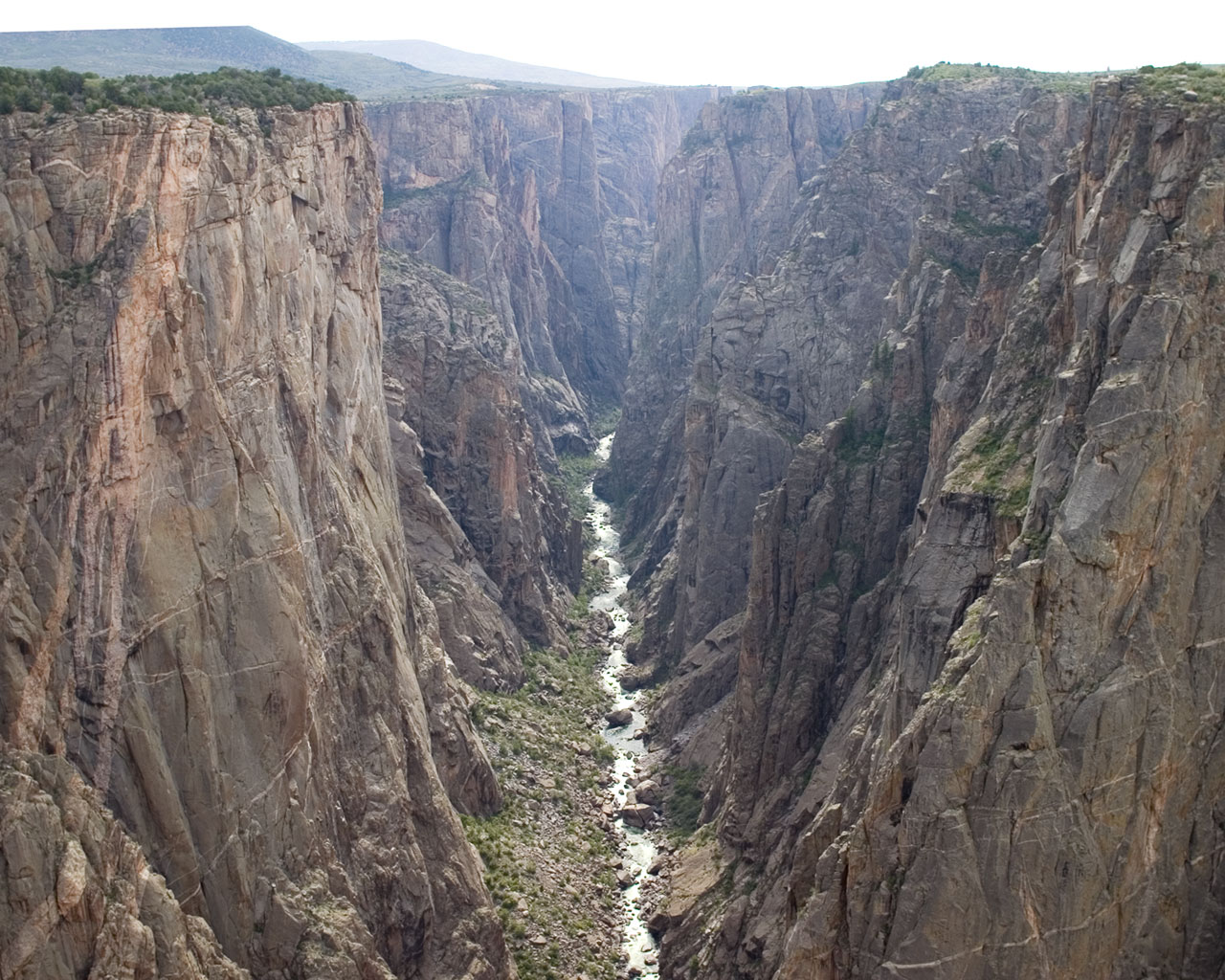
Just returned from a quick two day jaunt to the Black Canyon, Colorado's biggest and raddest climbing venue. I've only been out to the REAL big ditch a few times, but every time I'm inspired to go back as soon as possible.

On this trip, I was joined by friends Josh, Blake, and Rob. Monday morning, waking at a fantastic bivy spot just outside the park entrance, we fortified our constitutions with plenty of coffee, bacon, and eggs. A short drive to the canyon rim, and an even shorter walk, brought us to the brink.

The brink of the 2000' South Chasm View wall!

THE BLACK CANYON. Credit: NPS/Lisa Lynch

While Blake and Rob rapped in to go for a one day mission on "The Flakes", Josh and I packed a haulbag and dragged our pig down into the canyon. We rapped with the haulbag down to the plush "Two Boulder Bivy", and then continued down towards the river to the start of "Tague Yer Time"


Blake leading on P2 of "The Flakes" (shared with AstroDog) with Rob belaying.

A relatively new addition to the canyon, TYT is touted as one of the best routes in the Black, Colorado, or even the country! The FA party spent a fair amount of time cleaning and installing bolts where needed, and the work shows!

A topo of "Tague yer Time". Credit: Chris Kalous

Josh started up the 5.11 first pitch, casually onsighting the mixed bolt and gear lead. I took the second pitch, a stellar open corner, slightly under vertical. Though the crack itself was mostly sub-tips, both walls were highly textured, and enough pods appeared to provide adequate holds and pro. After onsighting through what I though must have been the crux, I just kept climbing, now determined not to fall. No obvious spot to stop and belay presented itself, and I continued up past many insecure mini-cruxes, becoming more and more desperate to end the pitch.

Finally reaching a stance, I consulted the topo and realized that I had climbed through pitches two and three, and halfway through pitch four, linking one 65m mega pitch. It was a super time-consuming lead, and I'd placed all but four pieces of the rack, which thankfully went in to build a belay.

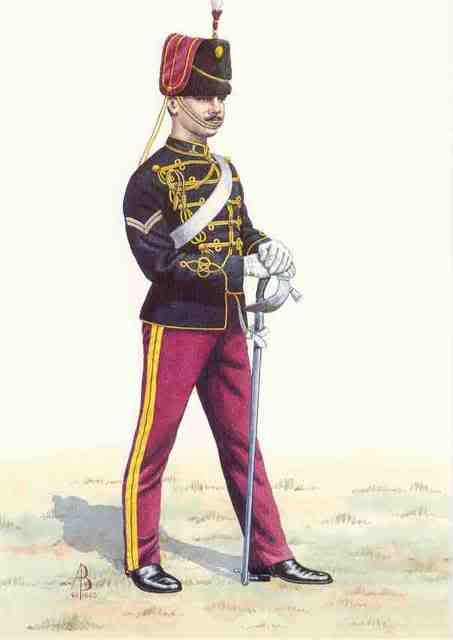
Josh, in pants reminiscent of the 11th Hussars, makes a thin corner switch on p4.

A member of the British 11th Hussars, "The Cherry Pickers"

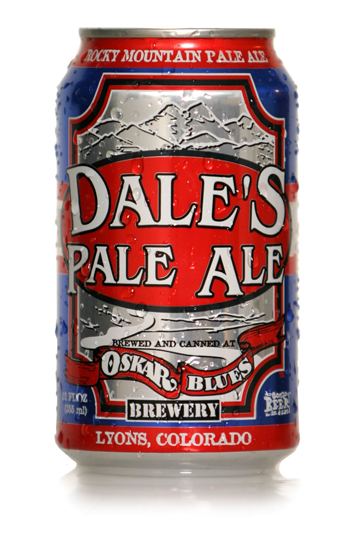
Josh took the next lead, with some classy stemming, corner switching, arete slapping goodness. Another tough pitch onsighted, and our send-train was officially rolling. A few more easy pitches brought us to a final 5.11 corner just below our bivy ledge, and I enjoyed the lead of the steep black dihedral with the growing desire for a cold can of Dale's Pale Ale.

We get to the ledge, and what do we find?! Four ice-cold cold-ones, just a-setting thar awaytin fer us!
(we had rapped it in, with a frozen two liter bottle to keep everything frosty)

Oh the advantages of top-down hauling! We had rapping in not only with beer, but way more food than we could possibly consume (and still have any chance of sending the next day). Knowing that we had to carry out whatever we didn't eat, we did manage to down the smoked salmon with pesto pasta, and loaded mashed potatoes, but didn't quite get to Bengali Lentils.


Untitled from Scott Bennett on Vimeo.

A short, and mostly lame, video shot at the two Boulder Bivy (it turns right side up in a second)

Our evening entertainment was rounded out by watching a party on "Stoned Oven", just across the canyon. What a unique experience, to be bivying on a bigwall, and have a mirror image big wall not even a quarter mile away! They had gotten an early start, but the famously burly route was taking it's toll and we had fun speculating on their mindset. We could hear faint belay commands shouted back and forth, and it was hard not to imagine a tinge of desperation or frustration as the sun set and many pitches of hard climbing still loomed between them and the rim. We watched as headlamps lit up, and progress slowed. We exchanged drawn out coyote howls as the moon rose above the canyon rim. We evened out our de-lux bivy site with ropes and haul bag as they struggled through "The Womb Fight". I woke briefly in the middle of the night to see their lights just a pitch below the rim... that was some quality entertainment.

Unknown party on Stoned Oven, late in the day.

Our run of good luck ended the next morning, though. We had planned to climb the remaining six pitches of TYT, and even started up the first pitch off the bivy ledge (an intimidating 5.12 corner). But the splitter weather was gone, and snow flurries spun through the air and gave the canyon a muted, almost claustrophobic feel. It didn't take much to convince up to bail, and the thought of mandatory hard face climbing on wet rock was not appetizing.

Josh looking up at the 8th pitch of TYT.

We bailed back to the bivy ledge, and started up our escape route, "Astro Dog". Though still a serious route, I had done the Dog last fall, and was confident that we could finish rain or shine. Hours of enjoyable 5.10 and 5.11 cracks, and some less than enjoyable hauling, brought us to the canyon rim and back to the boring horizontal world.

I will be back, though, as soon as can be arranged, to finish "Tague yer Time", and will report back here!

Friday, April 22, 2011

Extendo-Rapping

I've made a ton of interesting rappels in the past few years, but when climbing with Blake Herrington, it's always possible to learn something new. Unfortunately, that something will often be an esoteric and useless fact, such as the losing Vice Presidential candidate in 1872, how to improvise dining utensils with climbing gear, or maybe cheapest place to get week-old bagels in his home town.

But last week in Utah, I learned something useful: how to make a 40m rappel with a single 70m rope.

The basic idea is that, instead of rapping on both ends of your rope, as normal, you fix one end with enough rope to reach the ground, and let the other end function as a pull cord. You can then extend the pull-end with anything handy: slings, cordalette, belts, quickdraws, cams, wires, even jackets, t-shirts, pants, whatever. Since the pull end is not load-bearing, anything at your disposal can function to extend your rappelling range.


I'm sure most of you are having no trouble picturing the setup, but for those that haven't tried something like this before, here's some steps:

In order to to determine the length of the rap, and even if you have to use the extendo-rap at all, have one member of the party (let's call him Scott) single-line rap first on the full length of the rope (70m). Once Scott's on the ground (or to the next station), he can go off rap, but should hold on to the end of the rope. The second, still at the higher station (let's call him Blake), should then pull up rope until it comes tight on Scott. Now Blake knows that he has exactly enough rope to reach Scott.

Using the method pictured below, Blake then fixes the rap line. As you can see in the photo, this method allows Blake to rap on the longer end, and use the shorter end as a pull-cord to retrieve the rope.


Blake then begins rapping down the longer line, making sure to hold on to the pull-end (you can clip it through a QD on the back of your harness). When Blake reaches the end of the pull-end, he begins to extend it with any available material (slings, pants, etc) until he reaches the ground. Once on the ground, pull the pants and you'll retrieve the rope!


IMPORTANT CAVEAT! This is a slick maneuver, but not one that you'd want to rely on for multi-pitch rappels in adventurous settings. There is a huge potential problem: if you use the extendo-rap to reach a hanging belay, and then have a snag pulling (the knot gets caught) you could potentially find yourself in a situation where your entire rope is out of reach, and all you have is a few meters of slings (or pants!) with which to work. So, I would only recommend using the extendo-rappel when making you're last rap to the ground, or if the pull is super-clean.


Oh Benjamin Gratz Brown, what a different place the country might be if you'd been Vice President instead of that scoundrel Henry Wilson!